Leg Vein Anatomy - An Overiew
Conveniently located to serve Los Angeles
Visible leg veins, aching, and swelling can be sources of discomfort and cosmetic concern. The first step toward finding a lasting solution is understanding the complex network beneath the skin.
At Nu Vela Laser and Vein Center, Dr. Raffi Dishakjian provides comprehensive vein care for patients throughout Los Angeles and Porter Ranch, CA, beginning with a detailed assessment of your unique venous structure.
What Are Leg Veins and How Do They Function?
Veins are blood vessels that carry blood towards the heart. Arteries, on the other hand, carry blood away from the heart, completing the circulatory system. A vein can range in size from 1mm to 1.5cm in diameter. With a few exceptions, like the veins carrying blood from the lungs to the heart, veins that return blood from the body carry oxygen-poor (deoxygenated) blood. Veins can be categorized into superficial and deep veins.
The Venous Structure of the Legs Explained
The anatomy of leg veins is organized into three distinct, interconnected systems. Each plays a specific role in maintaining healthy circulation and proper venous drainage of the lower limb. These systems include the deep veins, the superficial veins, and the perforator veins that connect them. Problems in any one of these areas can affect the entire network.
Venous Structure of Legs
The anatomy of leg veins is organized into three distinct, interconnected systems. Each plays a specific role in maintaining healthy circulation and proper venous drainage of lower limb. These systems include the deep veins, the superficial veins, and the perforator veins that connect them. Problems in any one of these areas can affect the entire network.
THE PRINCIPLE SUPERFICIAL AND DEEP VEINS OF THE LEG
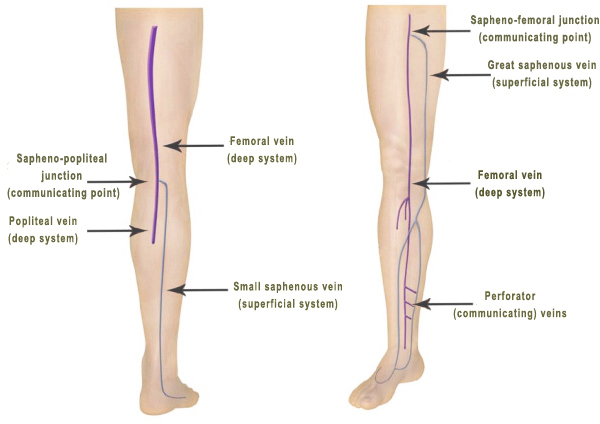
Deep Veins of the Leg: Pathways to the Heart
The deep veins of the leg are located deep within the leg muscles and are responsible for carrying the vast majority of blood back to the heart. Because they are supported by strong muscles, they handle high-volume blood flow.
Key deep veins include:
- Femoral Vein: The main deep vein running up the thigh.
- Popliteal Vein: Located behind the knee, connecting the veins of the lower leg to the femoral vein.
- Tibial Veins: The anterior and posterior tibial veins run along the two bones of the lower leg.
Because of their critical role in circulation, a blood clot in one of these veins—a condition known as Deep Vein Thrombosis (DVT)—can be a serious medical issue.
Superficial Veins of the Leg: The Saphenous System
The superficial veins of the leg are located in the fatty tissue just beneath the skin’s surface. While they carry only about 10% of the leg’s blood flow, they are often the source of visible conditions like varicose and spider veins. A complete understanding of saphenous vein anatomy is essential for treating these issues.
- Great Saphenous Vein (GSV) – The great saphenous vein (GSV) is the longest vein in the body, running from the foot up the inside of the leg and connecting to the femoral vein in the groin. Venous reflux or valve failure in the GSV is a primary cause of varicose veins on the inner thigh and calf.
- Small/Lesser Saphenous Vein (SSV/LSV) – The small saphenous vein (SSV), sometimes called the lesser saphenous vein, runs up the back of the calf, from the ankle to the knee. It typically connects to the popliteal vein. Issues within the SSV are often responsible for varicose veins on the back of the lower leg.
Perforator Veins: Connecting the Deep and Superficial Systems
Perforator veins, or communicating veins, serve as bridges between the deep and superficial systems. They have valves that are designed to direct blood flow from the superficial veins into the deep veins. If these valves fail, blood can flow backward into the superficial system, causing high pressure that can lead to varicose veins and skin changes.
Major perforator veins include:
- Hunterian Perforators: Located in the mid to upper thigh.
- Dodd’s Perforators: Located just above the knee.
- Boyd’s Perforators: Located just below the knee.
Why Understanding Leg Vein Anatomy Matters
A thorough understanding of leg vein anatomy is fundamental to diagnosing and treating vein conditions. For example, treating visible varicose veins without addressing an underlying issue in the great saphenous vein will likely result in recurrence.
By mapping the venous system with tools like ultrasound, a specialist can identify the precise source of the problem—whether it originates from superficial reflux, perforator vein incompetence, or another issue—and create a treatment plan that delivers lasting results.
Before and After Leg Vein Treatment Results
An accurate diagnosis based on your venous anatomy allows for highly effective vein treatment options. The following images show the results patients have achieved by addressing the underlying cause of their vein conditions.
Frequently Asked Questions About Leg Vein Anatomy
+ What are the first signs of vein problems in the legs?
Early signs often include a feeling of heaviness or aching in the legs, particularly after standing for long periods. You might also notice mild swelling in the ankles, itching, or the appearance of small spider veins.
+ What is the main deep vein in the leg?
The femoral vein, which runs the length of the thigh, is considered the main deep vein in the leg. It is the primary channel for transporting blood from the lower extremity back toward the heart.
+ How can you check the health of your leg veins?
A definitive assessment of vein health requires a medical evaluation, typically involving a physical examination and a duplex ultrasound. This imaging technique allows a vein specialist to visualize blood flow and identify valve dysfunction.
+ What is the difference between superficial and deep veins?
Deep veins are located within the leg muscles and carry about 90% of the blood back to the heart. Superficial veins are closer to the skin’s surface and drain into the deep system via perforator veins. Most visible vein issues originate in the superficial system.
Expert Vein Care in Los Angeles & Porter Ranch, CA
Choosing a provider with specialized knowledge is the most important step in addressing vein health. Dr. Raffi Dishakjian is a board-certified phlebologist (vein doctor) with decades of experience diagnosing and treating the full spectrum of venous disorders. At Nu Vela Laser and Vein Center, we use advanced diagnostic tools to precisely map your leg vein anatomy, identify the root cause of your concerns, and offer personalized and effective treatment plans.
Schedule Your Vein Consultation Today
Take the first step toward healthier legs. Contact Nu Vela Laser and Vein Center to schedule your personal consultation with Dr. Dishakjian. We will perform a comprehensive evaluation and discuss your treatment options to help you achieve lasting comfort and results. We proudly serve the greater Los Angeles and Porter Ranch communities.